hot on the heels of a conversation i was having yesterday about music subscriptions and the issue of transference, it seems that yet another legal battle or other may destroy music lovers' hearts. Apple is threatening to shut down iTunes if it goes through.
i think that of all businesses, the music business has single-handedly gone out of its way to make shit absolutely horrid for themselves. if there is an antithesis to social media, it's the music business. there is nothing social about it and there seems to be an utter disrespect and apathy toward the consumer which they, on the other hand, so avidly court by banning pirating and slapping on RIAA fines before you can say "student loan."
[i'm not referring here to social media music sites like Last.fm or iLike, i mean the industry itself--those in charge of distribution and collection to and from those lesser sites.]
this is not Apple's fault. i don't want them to shut down iTunes, but i don't think it's right for the record execs to hoc more cash out of the resellers, especially when in most cases it's not like the artists see a raise. it's like the music bailout to save some cushy chair's job.
between a copyright hike and streaming radio battles the likes that Muxtape, Pandora, and many more face, all that the music industry is accomplishing is blowing off the one foot they've got left. REALITY CHECK. people are going to find more, new ways to pirate if you're going to make it harder to be legal. work WITH our needs, not against them!
i am a full legal music downloader. i buy everything from iTunes (if .mp3) or Amazon (if CD--i do still buy those). if i hear it on Pandora and like it, i buy it legally. partially because it's easy and partially because, at some point, i respected the industry, and still respect the musicians. the former is fast going down the crapper.
UPDATE 10.03: The Copyright Royalty Board Does Nothing. iTunes’ Rates Remain The Same.
10.02.2008
i may cry: Apple to shut down iTunes?


9.30.2008
Facebook facelift reveals a shift
well, it's official. like i said. facebook is no longer about the college age demographic. it shed that skin last night. it's leaving the 13-25 scene to Myspace with a firm kick and something like 'good riddance!'
it seems that by forcing all users to upgrade to the new, streamlined layout, the new projected image is supposed to be more professional, and as a friend pointed out, certainly more viable for marketing opportunities. add to that the new iPhone app and then tell me how many people in the 13-25 age range you know that own an iPhone--and well, you get the idea.
expanding its target to gain traction with a wider age range of users, making it more media viable, and adding support to items like the iPhone, only further go to show that Facebook isn't really interested in helping you connect to your friends any more.
you see, you only have so many friends, really, and they want more users than that. so the tag line on the new, improved home page has moved from the "people around you" controversy to "people in your life"--even that person you WoWed with 3 years ago in South Africa. i guess now it's okay to "make new friends." especially if they're out of school and make/spend money.
UPDATE 10.02 via Darryl Ohrt: now supported by stats from Matt Dickman. seems we were having similar thoughts.
9.02.2008
hijacked! twitter ads, stupidity vs intellect.
 interesting thing landed in my twitterbox this morning. (why did that sound dirty?) @ischafer, of Deep Focus, pointed out this mashable article in which Twittad (...that also sounds dirty) debuted.
Twittad is an online account-auctioning service which functions as the go-between for users looking to monetize their twitter accounts and those willing to buy the impressions of those accounts' followers. skeezy? i'll let you decide. thing of it is, it may smack of familiarity. and it should. since Ian did it for a good cause last May.
but rather than have charity involved, this is just another experiment into how to monetize, cashify, etc the social media sphere (twitter in particular). does that make it worse? some people argued that when discussing adapting the SocialVibe platform to non-charity based advertising, and there may be something to it.
regardless.
there are a few big differences between Twittad's approach and Ian's approach other than the charitable aspect. and this is the heart of the matter:
1. Ian is awesome.
ok. well, that's subjective, but the point is relevant. Ian has a following of cultlike proportions (again perhaps i exaggerate a little). he has things to say that people want to read. he is likable, relevant, and has 700+ followers (as of today; when he did this in May, it was less, but still in the multiple hundreds). he has an understanding of social media to ensure authentic, useful usage of the account during the duration of the sponsorship. and promised 8-10 outbound tweets/day.
...TWITTAD ERROR: it is hard for a sponsor to be sure that the user of the account being purchased is as insightful, conscientious, and influential.
2. his followers have a higher probability of awesome.
you know what you're getting when you buy his space. he has the ears and eyes of many professional elite from the marketing, advertising, and journalism realms, among others i'm sure. you know exactly what target your message is getting sent to and how apt they are to be viewing the advertisement of the sponsor.
...TWITTAD ERROR: if the purchased account's followers are not of a particular target, demographic, or, well, anything, you may risk shouting into the wind; you also are unsure of the level of interaction those followers have with the sponsored account.
3. you are assuming followers give a shit.
as a social media guru, people were interested in Ian's experiment. it was intriguing, charitable, and unique. as Dude A college junior needing $16 for laundry, i'm not sure i care about what you're advertising. moreover, the major downfall of Twittad is that it only gives a profile image (not the usericon). any user of twitter knows that you rarely visit a person's actual profile page. you're busy looking at your feed, often through other second hand apps, like Twhirl. if there are any real impressions to be had, it would be through the usericon.
...TWITTAD ERROR: fail, for the aforementioned reason. almost nobody goes to a person's profile page. unless it's a new follower you may want to follow back. or a funny profile you sometimes click to but don't actually follow, like @chucknorris or @FakeSarahPalin.
---
so in short, Ian did it first, did it better. then again, many of the selling twitter accounts are going for pretty cheap. is this more of a get-what-you-pay-for mentality? banner ads 2.0 anybody?
8.25.2008
is your brand a moth or a butterfly?
 i was reading Faris' blog, as i usually do, when i came across his post regarding The Moth, a slam-style storytelling circle in NY and LA. apart from the fact that it's bloody awesome (and that i will probably go to the Nuyorican showing), it got me thinking about moths and butterflies--a motif that has been following me for months now.
"the founders felt was analogous to:
the characters in their best stories would often find themselves drawn to some bright light—of adventure, ambition, knowledge—but then find themselves burned or trapped, leaving them with some essential conflict to face before the story could reach its conclusion."
the moth represents conflict with the world. it is the self which both loves and yearns. like the butterfly, it too forms a cocoon and transforms itself, but that is not what it has come to symbolize. the moth is about the tension of reconciliation; the struggle for understanding with the exterior world and our place in it.
the butterfly represents conflict with oneself. the symbolic butterfly is about the personal journey, the thing one must undergo in order to develop into our full potential. it is an interior search. the butterfly becomes a symbol of freedom and beauty once the insect emerges. the story ends there.
the one, emphasis on the interactive journey; the other, emphasis on the personal journey. i identify a lot with moths in that regard, but i also came to think about it in terms of creative, and in terms of advertising. for a long time, advertising has been the butterfly. it has been about the personal, transformative journey of the brand. it is this point of view which expects others to love simply out of the respect and beauty of this journey.
this brand has not yet tried to find its place in the world. it has not reconciled itself to interaction, to the space outside of its own head. some advertising is handling brands like moths, are pursuing that tension between self and other, and are fostering those spaces. they are telling the stories not about themselves, but about connections.
in this way, moth branding is more accessible. it asks me to identify with our common spaces, rather than identify with your personal journey. i am not going to like you because you are a heap big 60 year old auto company that has survived through the years and shown your mettle; i will identify with you on my own terms, the ones that show the light of you and i.
but, like the moth, there will be tension. we are experiencing this now, with words like monetization, cashification, viral, social, what have you. we are trying to find our way through this jungle. advertising is romancing the light. only some will get burned. some will have never tried at all.
[photo shown left: Blue's Creative Outlet, specializing in funky moth & butterfly jewelry]
6.10.2008
the socialcash monstrosity. cashify baby.
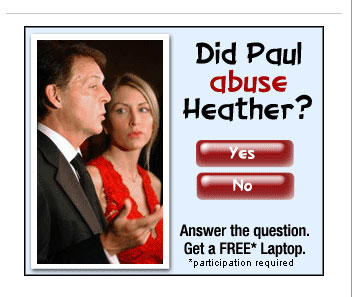 right on the heels of Facebook's leap forward (previous post, ability to vote up/down on advertisements users see) is this monstrosity called SocialCash.
"What that means, is that users are given the option to earn stuff in return for completing offers -- like applying for credit cards, getting information about vacation rentals, receiving free trials of magazines, or finding out their credit score. The offers subsidize the reward (like, say, an iPod Touch or an XBox 360) and the developer gets a cut."
so wait, wait--let me get this right.
i click stupid advertisements, fill them out and pretend to like them, and instead of paying me, you give me branded products. yeah, cos that sounds revolutionary. or like a banner ad in and of itself: "click me and a win a free ipod!" yeah thanx no.
i don't want to sign up for credit cards, give out information to third parties via banner ads, or learn more about vacation rentals i won't use, just so i can have a chance at an ipod. no value there. this won't work.
when i said users should be involved with their advertisements, i said in the ads selection. "paying me off" taking time to do shit i don't want to do for stuff i don't want when i could be playing with facebook apps (talking beneath me, here, but you get the idea) is not my idea of a good time.
the only reason socialvibe works with perks is because a) i don't have to DO anything -- the badge stays on my page. b) the information i share is with socialvibe only, or may be shared with my sponsor/charity of choice. c) i go into it knowing that i'm not doing it for the perks, i'm doing it for charity, so if i don't get a $20 gift certificate, i'm not going to be cranky.
but if i fill out hundreds of stupid banner ads or pop up offers or what have you and don't see anything for it--except for lots of credit card bills well then i'm still going to have to go with a HELL NO. this is not RELEVANT. REMEMBER to be relevant when dealing with a teen market! you are not important to them unless you're doing something they already want to do. newsflash: they don't already want to fill out for vacation rental deals. they're sixteen.
"The Gratis concept works for two reasons: 1. people love free stuff, and 2. in order to get the stuff, users must invite a certain number of users who also complete the program (the number varies based on the value of the reward). So the customer pool grows virally and exponentially."
...stop calling it viral. it makes you look bad. < /peeve >
"Clearly, the viral spread didn't work"--anyone else find that sentence funny twofold?
6.06.2008
a triumph: advertising and facebook
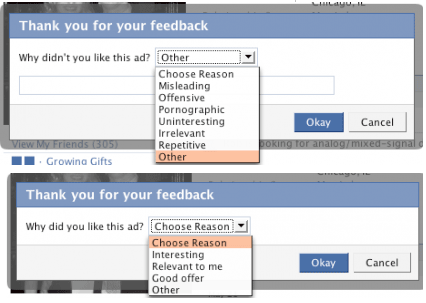
check this out, courtesy of readwriteweb. seems facebook has quietly enabled users to vote up or down on advertisements they see, according to relevancy, redundancy, and felicity.
sure, it's not quite what i'd like to see, but it's a helluvalot better than nothing at all. kudos, and thank you, facebook.
5.21.2008
i have advertising thoughts.
so, after having the luck to engage in an interesting conversation with Ian Schafer, a very smart man, yesterday via Twitter, i decided to delve deeper into the advertising thoughts i initially considered in "huge tracks of land."
i asked what he thought of socialvibe and its implications, after reading something written in Adweek (wish i knew what it was, the link is gone now). he felt skeptical because it gives incentives for a given behavior, but felt that the fact socialvibe benefited charities may even it out. i replied that i liked it because it enabled users to choose what their profiles support, giving street cred to the ads.
he argued this would be problematic if all users were allowed to select their own advertising, because some advertisers wouldn't be selected, and users would inevitably support 'prom king' brands. which, naturally, has a lot of merit. because it's true.
but, nevertheless, the concept i'm talking about would only apply to a user's specific profile--not the apps page, or the main page, or 'common areas' owned by more than one person (ie, events or groups). in that way, less popular folks could still get the word out on the same platform, while making advertising more relevant on personal spaces. agreeing in theory, examples he offered were like nascar or skate decks.
i then asked him if he thought incentive was a bad thing to offer users, since it is the users who bring value (data) to the networks. after all, if the users weren't valuable, advertisers wouldn't be up in arms trying to sort out how to reach them effectively, and there wouldn't be such a bid on Facebook's ownership. and guess what? kids are starting to realize this. i wish i had the Facebook link, but kids were responding saying they wanted money for their data being used. i was floored.
in comparison to giving up cash flow, what's wrong with perk compensation for choice advertisements? ian replied saying that, "playing devil's advocate, isn't using a service for free compensation enough for seeing ads?" initially, i say, yes, by far it's compensation enough, even on a place like Twitter, where i'm not giving out a lot of data value. but on Facebook or Myspace? it seems the perfect way to solve the ad-relevance problem.
+ let users choose the ads their profile page sponsors.
[on social media sites in which the users offer up a lot of personal information, like Facebook and Myspace]
- give them the option of using socialvibe in its place.
[so that if they should want, they can donate to charity through their ads. not all users will opt for this, though, since i doubt socialvibe could host the multitude of sponsors kids will want, and i doubt those multitude of sponsors all want to donate to charity.]
+ use the socialvibe method for incentives
[each day the ad is up, you get 1 Entry. on a given day, there are drawings for incentives that support the user's chosen sponsor. IE, a $20 gift certificate to PacSun for those whose ads are for PacSun. this promotes brand value at the same time as not too much monetary loss. this also fosters elitism and competition, which also adds brand value.]
+ in this way, social space advertising becomes relevant
[if the ad reflects my friend's interests, i'm going to be equally as interested in his or her brand choices as their music choices. we show our sponsors on our tee shirts, from brands to clothing companies to coca cola; showing our preferences on our profiles will only add to this level of sharing. in fact, limiting the amount of sponsors a profile can have will become necessary, likely only 1-3. this increases response rate to advertisements. it also makes users feel like a worthwhile part of the cycle, rather than having ads be something purely ignored.]
these are my current advertising thoughts with regards to social media networks.
i'm already a walking advertisement. i'm supporting my socialvibe charity as i type this in my TWLOHA shirt while wearing matching MAC eyemakeup. why not capitalize on these tendencies and harness them to make advertising more useful without being more intrusive?
5.16.2008
huge... tracks of land. yeah.
 can i get another "duh" and "i was right" in this corner? kthanx.
adrants picked up a piece on SocialVibe which--guess what? makes social networking ads more relevant by appealing to peoples' ACTUAL interests.
effin' novel, i tell you. bloody hell. finally. "huge tracks of land" aside, awesome way to advertise, and even better that it's linked to charities. that gets a huge KUDOS from Riot. in fact, i'm going to go implement it. so there.
next step? have user-chosen ads REPLACE non-chosen ad placement on user-interfaced social media sites like Facebook, Myspace.
4.15.2008
words on twitter, 1 of 2: ad testing.
i think it's funny how twitter has become its own buzzword.
i'm waiting for the day when i hear someone doing it "twitter style" (short and to the point; no frills).
anyway.
i am disconcerted today about twitter for a number of reasons:
1) the addition of ads conversation
2) the lack of conversation... conversation
--
so yes, one is the ad testing from last night. no, i'm not pissed. the folks want to monetize. who doesn't? high chances i'm not going to love the ads, and yes, in the words of @Armano, i do feel a little 'cheated on.' the adlessness was too good to be true along with no billing.
at least the ads won't be behind my eyelids when i sleep, or broadcast into my brain (that's still creepy. i'm not sorry for pointing that out again. shame on people who celebrate its effectiveness.).
my main question is this, which brings me back to my previous post on txt messaging: will these ads be delivered into phones via txt? or will they be a part of the feed on the Twitter website? i would still find it repulsive to be charged for a txt ad Twitter sent to my phone. however, i would find it more acceptable if i had to skim through my tweets and find some ads there.
what's the plan, Twitter, eh? getting more complicated? careful you don't lose your relevancy and the reason why you're so wonderfully efficient: short, sweet, and to the point. no frills. somehow i feel ads may jeopardize that relevancy. suggestion? users choose the ads we subscribe to on our feeds. i might hate it a little less that way.
4.07.2008
if you don't sell it to me, i want it more.
isn't that how it always goes? the hard to get.
this post by AdScam got me thinking, especially in light of how i want all brands to stop txting, or never txt, me.
"That's why ultimately the big social networks will fail, because they will lose their exclusivity."
i agree with that. even in my earlier posts i talked about how i dislike facebook and how myspace is losing me. forget about the other ones--i'm not on them.
so again: it's about understanding your target in the sms process.
the more you stalk me, the creepier you are, and the less i want to give you my money. the phrase "social media" has become to the ad biz what "diversity" is to colleges: hunted after, faked for, and very rarely actualized.
--and guess what? stalkers are sketchy on both 'campuses.'
so i gave this exclusivity some thought. because really, we all want to secretly be that indie kid (even if you hate indie) because he knows what's up before everyone else does. he's heard of that band you've never heard of. there's an elitism to that. being one of the first gmail subscribers had that feel--back when you had to be invited in. this is our club. do you have the password?
also, i think it's easy to understand that sms branding works best when it's not in-your-face. interaction is the key to (gasp) interactive medias. not just throwing up a title page and hoping for some stellar recall. because of these two thoughts--subtlety and exclusivity--i do think there's a way for savvy brands to harness social networking.
because after all, who wants to be second best?
why are brands placing ads on facebook? running campaigns in friend groups?
show me a relevant brand. then show me their relevant, well done social network. social networks become brands, anyway. why not the inverse? why not the secret?
hide it from us. we'll find it.
4.03.2008
stop txting me pls. (!)
subtitle: i have an adcrush on danah boyd.
if you don't know about her yet, what's wrong with you? love her or hate her but you need to know. she's doing ethnographies that are incredibly relevant to the shifts of emphasis in the ad biz. so listen up. i know some of you are, and i love you for it. [brief rundown? Agency Spy rocks my socks.]
anyway. long story short? stop texting me.
i know that email won't remain the best way to get in touch with my generation in the future, but that doesn't mean you need to turn to text messaging. as we all know, my generation is increasingly more public with our information on the internet, regardless of how we craft ourselves. key words? on the internet.
if your spamails aren't working out for you, text messaging surely won't. i would be more annoyed receiving texts (and being charged for them by my service provider!) that are unwanted than emails. not to mention, you can't opt-out of text spam like you can unsub from emails. that results in me getting cranky with my carrier.
cell phones? personal and business. spam has taken over email. if it takes over text messaging, that will a) be less productive than intended because of the unwanted setting and b) will only decrease in effectiveness.
! but i'm not all bitch and no suggestions here, folks.
you want to utilize text message spam so badly? how about you do this crazy thing called... respect. i know that means very little on the 'net these days, but it's something that might be considered over phrases like friendly stalking and privacy invasion.
why don't you offer people the ability to subscribe to text messaging for products they like? some commercials advertise this ability. because that changes the game. that means i am interested in what you're trying to sell me. you want me to subscribe to a DriveThru Records (or any other label for that matter) text messaging feed in order to tell me what concerts are now up and when tickets go on sale? GO FOR IT, i'm in.
it's all about relevance, which is what the lovely danah boyd and others keep trying to express. you can't just throw up an ad into a Facebook setting and expect people to suddenly love you and be loyal to your brand. engage with them. become relevant. i know the movement is toward mobile, but can't you be respectful about it?
a la miss danah:
"I think that most brands make mistakes because they don’t understand the social dynamics. Think of MySpace/Facebook as a public hangout space. When is it socially acceptable to go up to a group of friends hanging out at a pub or having a picnic in the park? If you treat it that way, the boundaries are much more logical. If you have something relevant to add to the conversation, you might be asked to pull up a seat/join the mat. If not, you will be seen as sketchy and annoying. You are always welcome in the backdrop, but don’t expect to be included just because you’re there. And be careful.. there’s a fine line between being an active participant on an SNS and being seen as a spammer. You’re often better off being a legitimate participant (a.k.a. buying ads) than trying to coldcall folks."
take home message: if i WANT your spam, i'll ASK FOR IT.